
Search for Kalutara beach safety and you will find conflicting answers within minutes. One traveller calls it a clean, safe swim. Another says a lifeguard waved them out of the water. Both accounts can be true, since conditions along this coast shift quickly with tide and season. Wadduwa, just up the coast, is the more consistent choice for swimming, thanks to a gentler seabed and a milder undercurrent than Kalutara’s steep, unpredictable shelf.
4th November 2026
- Lifestyle
- Travel
Wadduwa vs Kalutara: Which Beach Is Actually Safer for Swimming?



Here is exactly why, and what it means for your stay.
Key Takeaways
- Kalutara’s beach has a steep drop and a strong undercurrent, and several stretches along it are not considered safe for casual swimming.
- Wadduwa’s coastline is calmer and more consistent, which makes it the better choice for swimmers, families and children.
- Sea conditions on Sri Lanka’s west coast are calmest between November and April, though this does not remove Kalutara’s underlying risk.
- If you are staying in Wadduwa, Kalutara is still worth a visit for its temple and river views, just not for a swim.
- The Blue Water Hotel and Spa in Wadduwa gives guests direct beach access alongside a large pool, so there is always a safe way to swim.
Why Kalutara Beach Is Risky for Swimming
Kalutara beach runs along an open stretch of Sri Lanka’s west coast, close to where the Kalu Ganga meets the sea. The seabed here drops away sharply, sometimes just a few metres from the shoreline.
That steep shelf creates strong undercurrents, particularly once the water passes waist height. Waves can also build with more force than the surface suggests when you are standing on dry sand.
Local reviews and hotel notes flag the same pattern:
- Sudden drop-offs close to shore, even at low tide
- A strong undercurrent that can pull swimmers sideways or out
- Lifeguards at some beachfront hotels actively discouraging swimming beyond ankle depth
- Safer conditions generally limited to shallow paddling rather than proper swimming
- Wider, calmer stretches near the river mouth that still carry a real risk of sudden currents
None of this makes Kalutara beach unpleasant to visit. It simply means the beach suits sunbathing, long walks and photography better than it suits swimming, and that is worth knowing before you plan your days around it.
What beach safety experts call a rip current is largely to blame: a narrow channel of water pulling away from shore faster than it looks, most likely to form where the seabed drops sharply. Kalutara’s steep profile makes this more common than on a gently sloping beach nearby.
What Makes Wadduwa Beach Safer for Swimming
Wadduwa sits further along the same coastline, but the seabed behaves in a noticeably different way. The slope into the water is gentler, and the undercurrent is far less pronounced than at Kalutara.
This difference is one reason Wadduwa grew into a proper resort belt rather than a working coastal town. Resorts here are built with long, direct beach frontage, because the water itself supports that kind of stay.
What this means for swimmers:
- Wading in gradually, rather than facing a sudden drop
- Swimming within a supervised area at most beachfront resorts
- Broadly steady conditions from one day to the next
- Children able to stand comfortably in waist deep water without being pulled off balance
That predictability is easy to underestimate until you compare it directly with a beach like Kalutara, where the same spot can feel calm one afternoon and risky the next.
Wadduwa vs Kalutara: Swim Safety at a Glance
| Factor | Wadduwa Beach | Kalutara Beach |
| Seabed slope | Gradual | Steep |
| Undercurrent | Mild to moderate | Strong and unpredictable |
| Best suited for | Swimming, families, children | Sunbathing, walks, photography |
| Lifeguard presence | Common at beachfront resorts | Varies, some hotels warn against swimming |
| Best season | November to April | November to April, though risk still present |
| Depth to stay cautious of | Beyond chest height in rough weather | Beyond waist height at almost any time |
How to Judge Sea Conditions Before You Swim
Even on the calmer beach, conditions change through the day. A few habits help you judge whether it is safe to go in, wherever you are staying.
- Watch the wave pattern for a few minutes before entering the water. Sets that arrive close together and break hard usually mean stronger undercurrents underneath.
- Ask hotel staff or a lifeguard rather than relying only on how the water looks. Staff who work the same stretch daily notice changes that visitors will not.
- Check for flags or posted warnings at the beach entrance, where these are in place.
- Avoid swimming alone, and stay within sight of someone on the beach at all times.
This kind of daily judgement matters more on this coastline than a general rule ever could, because conditions genuinely differ from one morning to the next.
Who Should Be Extra Careful in the Water
Some travellers carry higher risk than others on this stretch of coast, regardless of which beach they choose.
Take extra care if you are:
- Travelling with young children who cannot judge current strength for themselves
- A weak or inexperienced swimmer
- Swimming alone, without anyone watching from the shore
- Visiting outside the November to April window, when seas are generally rougher on both beaches
If any of this applies to you, a supervised hotel pool is a safer choice than open sea swimming at either beach, at least until you have had a chance to judge conditions for yourself.
What to Do in Kalutara Apart from Swimming
Staying in Wadduwa does not mean skipping Kalutara altogether. The town itself is worth the short trip, just not for a swim.
Wadduwa’s location on Sri Lanka’s west coast puts Kalutara within easy reach, so a half day out is simple to arrange without changing hotels.
Worth building into that half day:
- The Kalutara Bodhiya, a hollow white stupa you can walk inside, with murals lining the interior walls
- The local market close to the temple grounds
- The bridge and waterfront views over the Kalu Ganga
- A short river trip if you would rather see the water from a boat than from the shore
Most visitors come away glad they made the trip.
Treat Kalutara as a place to explore on land, on foot, at a temple or from a boat on the river, and save the actual swimming for Wadduwa’s calmer water.
Staying in Wadduwa: What The Blue Water Offers Swimmers
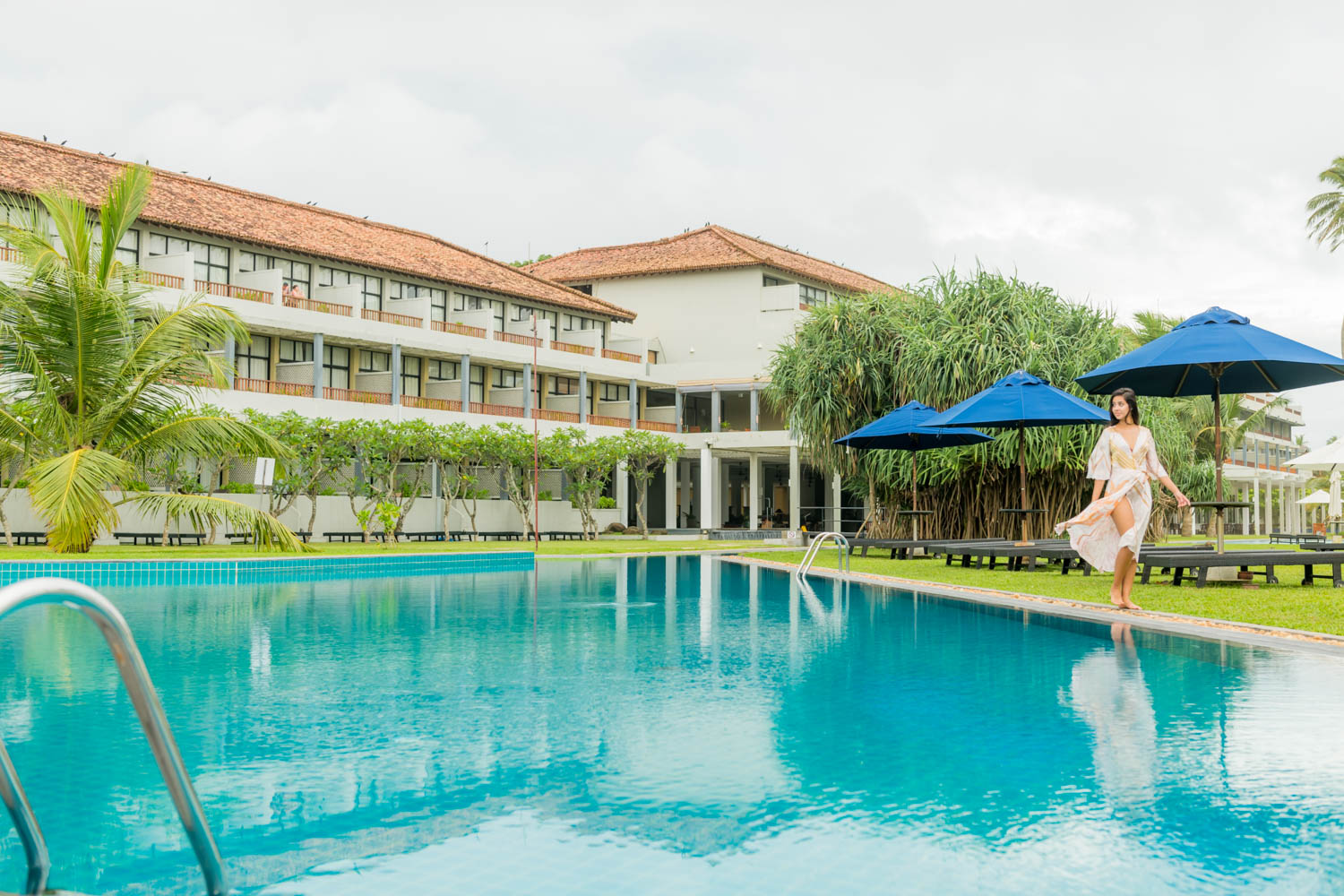
The Blue Water Hotel and Spa sits directly on Wadduwa’s beachfront, with a pool that runs from the lobby through the gardens down towards the shore.
Guests get two reliable ways to swim:
- A supervised beach stretch, when sea conditions allow
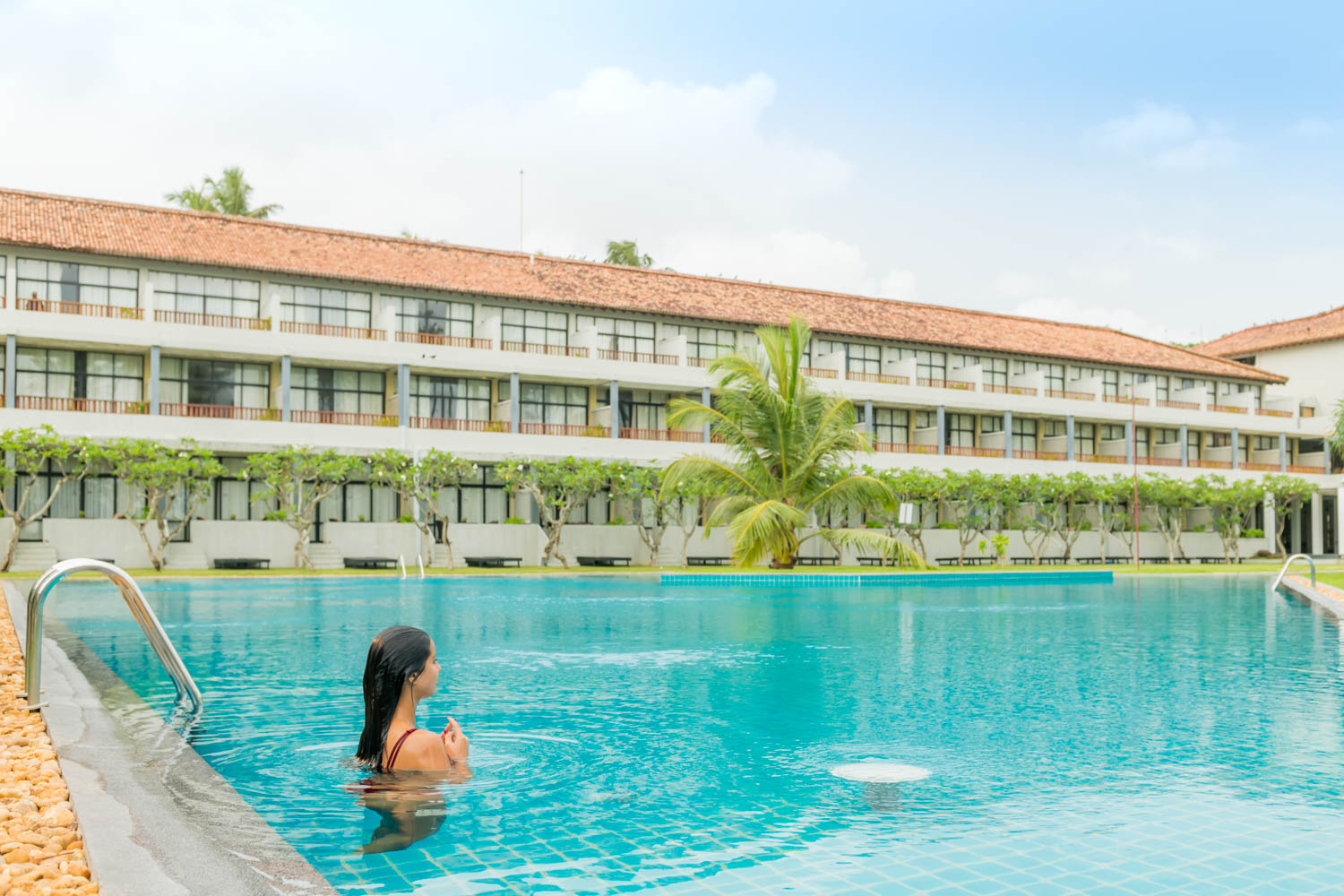
- A large pool as a steady backup on rougher days or during the monsoon
Staff who have worked here for years know how the sea behaves through each season, and will tell you honestly whether it is a good day for a swim rather than simply pointing you towards the water. It is one reason guests writing about their stay at The Blue Water often mention feeling looked after in the water, not just on the beach.
Families with young children tend to appreciate this most. Knowing there is always a safe option, whether that is the beach or the pool, takes one decision off a holiday that should be about resting rather than second guessing the sea. Anyone wanting a closer look at the rooms and suites this stay includes can see the full range before booking.
Plan Your Wadduwa Beach Stay With The Blue Water
If swimming is part of your plan, Wadduwa is the more reliable choice on this stretch of coast, while Kalutara rewards a visit on land rather than in the water.
Staying at The Blue Water means you do not have to guess which days are safe. Browse our rooms and suites and book your stay directly with us to start planning a beach holiday built around calmer water.
Frequently Asked Questions
Is It Safe to Swim at Kalutara Beach?
Generally, no. Kalutara beach has a steep seabed and a strong undercurrent, and several hotels along the beach actively advise guests against swimming beyond waist height. Staying at The Blue Water in Wadduwa makes this easy to avoid altogether, since the calmer water you will actually swim in sits right on your own beachfront.
Is Wadduwa Beach Safer Than Kalutara for Swimming?
Yes. Wadduwa’s coastline has a gentler slope and a milder undercurrent, making it the more consistent and safer option for swimming on this part of Sri Lanka’s west coast. The Blue Water Hotel and Spa sits directly on this stretch, so guests get the safer beach without having to travel for it.
Can Children Swim Safely at Wadduwa or Kalutara?
Wadduwa is the better choice for children, thanks to its gradual seabed and calmer water. Kalutara’s strong undercurrent makes it unsuitable for young or inexperienced swimmers. Families staying at The Blue Water also have a large pool as a backup, so there is always a safe option even on rougher sea days.
How Can I Check Current Sea Conditions Before Booking Wadduwa or Kalutara?
Sea conditions change day to day, so relying on old reviews rarely gives you a reliable answer before you travel. The most accurate way to check is to ask directly, and our team can share up to date conditions for Wadduwa’s beach and help you plan around them. Feel free to contact us before you book or once you have arrived.
What Should You Do if Caught in a Strong Current at Kalutara or Wadduwa?
Stay calm and swim parallel to the shore rather than straight back towards it, since most currents are narrow. Once free of the pull, angle back towards the beach, and always signal for help if you cannot make progress. Guests at The Blue Water can also flag down beach staff directly, who know this coastline’s conditions day to day.


23rd May 2026
- Foods
- Lifestyle
- Travel
Best Beach Destinations Near Colombo for a Short Getaway


24th May 2026
- Lifestyle
Corporate Beach Retreats in Sri Lanka: Business & Leisure Guide
17th June 2026
- Travel